
 Fast Delivery
 Made To Measure
 Customer
Support
Customer
SupportFrom the earliest flicker of electroluminescence to today’s smart, adaptive lighting systems, LED technology has transformed the way we illuminate our world. What began as tiny indicator lights on electronics has evolved into a versatile, energy-efficient solution used in homes, offices, and architectural spaces.
Arc LED is going to take you on a journey through time, looking at the first red LED in the 1960s, to the emergence of white lighting. We are going to explore the mass adoption that reshaped the global lighting industry. Today, LEDs are smarter, more flexible, and more sustainable than ever, paving the way for innovations like tuneable smart lighting, micro displays, and pixelated designs.
Whether you are an installer, designer, or end user, understanding the evolution of LEDs highlights not only how far the technology has come but also the exciting possibilities for the future.
The earliest use of LEDs dates to the early 1960s, and it was very different to how we use them today…
Early 1960s | Indicator lights
The first practical LED was developed in 1962 by Nick Holonyak JR. This early LED emitted red light and was not bright enough for illumination. Its primary use was as a low-level power indicator light. These early LEDs were used in;
- Electronic equipment as on/off indicators
- Calculators
- Lab equipment
- Digital clocks
- Measurement devices
They were valued due to them being:
- Extremely energy efficient for their size
- Long-lasting
- Reliable with minimal heat output
They were however, very expensive and limited in their brightness and colour.

1970s to 1980s | Displays and Signage
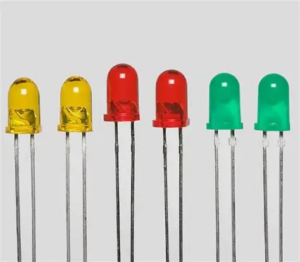
As LED technology started to advance, more colours became available (mainly yellow, green, amber) and would be used in numeric displays, electronic signage, and consumer displays. These LEDs were still not bright enough for general lighting and were mainly used as information and status indication. Towards the end of the 1980s, LEDs were starting to become more affordable and were used more widely across many industries.
The main problem with LED technology in this era was the lack of a blue LED. This meant that a white light could not be produced, and functionality was limited.
1990s | The breakthrough of the Blue LED.
As technology developed through to the 1990s, scientists Isamu Akasaki, Hiroshi Amano and Suji Nakamura developed the first efficient blue LED light. This was a major turning point in creating the white LED light. White LED light was further developed by coating a blue LED light with a phosphor layer, unlocking the potential for future LED advancements.
This work won the Nobel Prize for physics in 2014.
Early white LEDs were expensive and lower in output compared to their colourful counterparts, but the potential for future lighting applications was becoming clear. LEDs began expanding beyond indicators and developed into more visible and functional roles.
By the time the 1990s came to an end, we were starting to see LEDs being used for:
- Full-colour LED displays and signage
- Traffic signals (replacing incandescent lights)
- Automotive lighting, such as brake lights and indicators
- Decorative and architectural accent lighting
- Backlighting for early LCD screens
These applications demanded higher levels of brightness, a longer lifespan, and increased reliability. The new generation of LEDs could finally deliver on these fronts.
Why the 1990s Mattered So Much
LEDs in the 1990s did not immediately replace traditional lighting, but they did make it inevitable. By the end of the decade, LEDs were visibly brighter, had full colour options, and started to push into new industries such as automotive and signage.
In short, the 1980s proved that LEDs were reliable, but the 1990s proved that they could be transformative. This decade set the stage for the explosion of LED lighting in the 2000s and beyond.

The Early 2000s | From Breakthrough to Bright Ideas
By the time the 1990s came to an end, LED had evolved far beyond the simple indicator light it once was. The early 2000s saw the breakthrough in a high-powered blue LED. This opened the door for something that the industry had been waiting decades for: functional white LED light.
At the start of the 2000s, researchers and developers started to combine the high-output blue LED light with phosphor coating to produce a white light that was suitable for general illumination. This was the moment that allowed LEDs to finally compete with (and eventually outperform) traditional lighting technology such as incandescent, halogen, and fluorescent lamps. The start of the decade also found the development of the flexible printed circuit boards, which laid the foundation for LEDs to go into strip form that we see today.
This shift was not just a technical achievement, but also a commercial one. The high-output white LED allowed LEDs to be used for practical applications in homes, workplaces, retail, and even outdoor spaces.
Where LEDs Started Appearing in the Early 2000s
With improved brightness, efficiency, and colour accuracy (CRI), LEDs found their way into new categories, including;
- Flashlights and portable lighting, replacing filament-based lamps with longer-lasting, shock-resistant LEDs.
- Commercial signage and displays, with brighter and full colour reproduction.
- Street light trials, as cities were looking to switch to more energy-efficient solutions and lower maintenance costs.
- Automotive headlights, pushing beyond brake lights into full beam illumination.
- Architectural and decorative lighting, enabling cleaner lines, creative installations, and new design possibilities.
Designers and manufacturers alike soon realised that LEDs were not just another light source; they were a platform for innovation.
The Advantage in Performance
The 2000s saw a growing increase in LEDs due to offering distinct advantages in performance compared to their predecessors. These included;
- Lower power consumption
- Longer lifespan
- More compact forms
- Directional light output
- Lower heat emissions
- Vivid colour options without the need for a filter
These benefits made LEDs attractive not only for the end user who was seeking a cost-effective, and long-lasting solution, but also for installers and specifiers seeking a reliable solution with reduced maintenance needs.
During this period, many governments, manufacturers, and building standards organisations began to push for efficiency targets to phase out inefficient light sources. This offered an incentive for the development of LEDs, paving the way for them to become more mainstream. This drastically improved the performance standards and testing phase of the product.
By the end of the decade, the lighting industry had shifted its research and development spending towards LED technologies. Global energy policies started to recognise LEDs as the most promising solution for energy-efficient lighting. Prices gradually started to fall as manufacturing started to scale, also leading to rapid performance improvements. The stage was set for the next major phase, where LEDs finally became mainstream household lighting solutions.
2010s | LED Goes Mainstream
By the time the 2010s arrived, LEDs had made the leap from specialist applications to everyday lighting solutions. Improvements in manufacturing, materials, and chip design continued to push down costs and push up performance, making LEDs more attractive to the mass market.
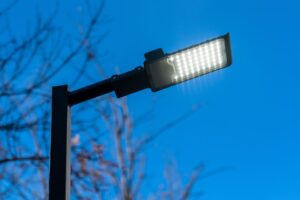
One of the key shifts during this decade was the phase-out of older lighting technologies. Many countries introduced regulations aimed at banning or limiting incandescent bulbs, while others incentivised energy-efficient alternatives. LEDs quickly emerged as the strongest long-term candidate due to their efficiency, longevity, and rapidly improving light quality.
LEDs in the Home
For homeowners, the 2010s were the first decade where LEDs (both in strips and lamp form) became both affordable and widely available. This also coincided with the technology allowing them to be dimmable, as well as the availability of a full spectrum of colour and white tones to choose from. Home lighting moved away from the question of ‘should I switch?’ to ‘which LED should I choose?’ with consumers often replacing their entire home lighting systems during renovations.
Commercial and Outdoor Adoption
Outside the home, the 2010s were transformative as well. LEDs were increasingly adopted for:
- Office and retail spaces
- Factories and industrial facilities
- Car parks and sports venues
- Street and highway lighting
- Public buildings and infrastructure
Reduced maintenance costs also played a huge role. For businesses and councils, a long-life light source meant fewer service callouts, lift rentals, and lamp replacements.
The Rise of Smart LEDs
Toward the latter half of the 2010s, LEDs began pairing with smart control systems, bringing new capabilities such as:
- App control
- Colour tuning
- Scene setting
- Voice assistance
- Motion and occupancy sensing
Lighting could now be adapted to suit the person, and not the other way around. This was vital in control flexibility and allowing the light of a home/commercial space to be effortlessly integrated with many different systems.
Individually Addressable LEDs
Around the early 2010s, manufacturers began integrating tiny microchips alongside LEDs. These chips allowed SPI (Serial Peripheral Interface) communication protocols to send data down the strip. This changed everything, as each LED pixel could now be programmed and controlled individually, allowing for a whole new experience with LED design and control.
We started to see this new technology become widely adopted in entertainment, architecture, and major events. Stage lighting, concerts, hospitality spaces, and theme parks alike were now starting to use a pixelated LED design to add new dimensions to their space.
Pixel control added features previously impossible to achieve with conventional tape. It was now possible to have:
- Dynamic chasing effects
- Rainbow and gradient patterns
- Wave simulations
- Reactive audio patterns
- Video mapping
During this period, DMX, SPI, and other control protocols started merging with traditional AV and lighting control systems, allowing LED tape to become part of larger synchronised environments.
2020s | Smarter, Cleaner, and more Defined
The 2020s have marked a major leap forward in LED strip technology, transforming it from simple accent lighting into a highly versatile, high-performance platform for both residential and commercial environments. Improvements in chip design, colour rendering, power efficiency, and pixel-level control have enabled smoother effects, better dimming, and more accurate colour reproduction, while the rise of smart home ecosystems has made LED strips easier to integrate, automate, and customise. At the same time, new formats such as COB and high-density pixel tape have expanded design possibilities, allowing for seamless lines of light, dynamic media effects, and immersive lighting experiences previously seen only in entertainment and architectural projects.
What is COB LED?
COB (Chip-on-Board) LED strip is a newer type of LED tape where many tiny LED chips are packed closely together and covered with a phosphor layer to create a smooth, continuous line of light. Unlike traditional SMD strips, COB has no visible LED “dots”, making it ideal for modern architectural lighting, shallow profiles and premium decorative applications. For domestic applications, COB strips are becoming a fan favourite and a more popular option. This is mainly because COB has:
- No ‘hotspots’, offering complete continuity
- Higher density of LEDs, allowing for easier diffusion
- Solderless connections, making it super easy to connect
- More modern look, due to its cleaner lines and professional finish
As a more advanced manufacturing method, COB elevates LED strip performance by improving diffusion and eliminating visible hotspots. It’s a strong example of how LED technology has continued to refine both function and finish over the past decade.
Development of SMD strips
As the 2020s progressed, SMD LED strip technology advanced rapidly, transforming from basic lighting solutions into highly versatile tools for designers, installers, and DIY enthusiasts. Improvements in efficiency allowed strips to deliver brighter illumination while consuming less energy, making them more sustainable and cost-effective. Colour quality also took a leap forward, with high CRI options ensuring natural, accurate, and vibrant lighting that works beautifully in homes, retail spaces, and professional environments. RGBW and tuneable white strips became mainstream, giving users precise control over colour, temperature, and mood. These developments expanded the possibilities for SMD strips far beyond simple accent lighting, allowing them to enhance architecture, highlight products, or create immersive, dynamic environments. The 2020s were a real step up in quality for LED usage, due to the following reasons:
- Brighter output with lower energy use
- High CRI for accurate, vibrant colours
- RGBW and tuneable white for customisable lighting scenes
- Flexible designs for easy installation and creative applications
- Versatile use in homes, retail, architecture, and immersive displays
At the same time, pixel-based SMD strips advanced significantly. Early RGB pixel strips that once grouped diodes into shared control segments progressed toward finer, more individually addressable pixel formats. This allowed for smoother gradients, more complex chases and reactive lighting effects that could synchronise with media, audio or architectural cues.
The rise of LED Neon Flex
LED Neon Flex tape is the next step in flexible lighting innovation. Unlike traditional rigid LED strips, Neon Flex is bendable, durable, and encased in a soft, weather-resistant silicone sheath, allowing it to curve around corners, wrap edges, and create continuous, smooth lines of light without visible gaps. This makes it ideal for architectural accents, signage, under-cabinet lighting, and even automotive customisation. Beyond aesthetics, Neon Flex tape is safer and more energy-efficient than conventional neon lighting, while offering the same visual impact. Compared to standard non-bendable LED strips, it opens possibilities for creative installations that would otherwise be difficult or impossible, combining flexibility, longevity, and ease of use in one sleek package.
Lighting The Future
From the earliest red indicator lights of the 1960s to today’s flexible, smart, and highly efficient LED systems, the evolution of LED technology has been extraordinary. Each decade brought breakthroughs. Blue and white LEDs, high-powered SMD strips, pixel-level control, COB designs, and Neon Flex tape that expanded both functionality and creativity in lighting. LEDs are no longer just a light source; they are a platform for innovation, enabling designers, installers, and homeowners to shape spaces, enhance experiences, and reduce energy consumption. As we move further into the 2020s, the combination of smarter control systems, advanced materials, and flexible designs promises even more immersive, adaptable, and sustainable lighting solutions. The journey of LEDs is a story of continuous innovation, and with each new advancement, the way we light our world becomes brighter, more dynamic, and more inspiring.